
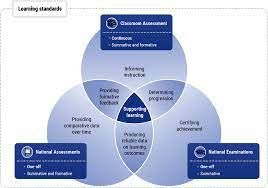
Major Goals in Physics Curriculum
The major goals in physics curriculum at secondary grades in Pakistan are designed to build strong scientific knowledge, develop thinking skills, and prepare students for higher education and careers. This article explains these goals in a clear and easy way so that even 8th-grade students can understand them.
Why Physics is Important at Secondary Level?
Before understanding the goals, it is important to know why physics is taught at this level.
Physics helps students:
- Understand natural laws
- Improve problem-solving skills
- Develop logical thinking
- Prepare for careers in engineering, medicine, and technology
- Understand modern technology like mobile phones and electricity
Overview of Secondary Physics Curriculum in Pakistan
In Pakistan, physics is taught from Grade 9 to Grade 10 as part of the science group. The curriculum is designed by national and provincial education boards.
Main Topics Include:
- Measurement
- Kinematics (motion)
- Dynamics (forces)
- Work and energy
- Waves
- Electricity
- Magnetism
- Modern physics
Major Goals in Physics Curriculum at Secondary Grades in Pakistan
Now let’s explore the main goals in detail.
1. Developing Scientific Knowledge
One of the primary goals is to give students a clear understanding of basic physics concepts.
Students Learn:
- Laws of motion
- Energy and its forms
- Electricity and circuits
- Heat and temperature
This knowledge helps students understand everyday phenomena like why objects fall or how fans work.
2. Building Critical Thinking Skills
Physics is not just about memorizing formulas. It teaches students how to think.
Key Skills:
- Asking questions
- Analyzing problems
- Finding logical solutions
- Understanding cause and effect
For example, students learn why a car stops when brakes are applied.
3. Encouraging Problem-Solving Ability
Another major goal in physics curriculum at secondary grades in Pakistan is to improve problem-solving skills.
Students Practice:
- Numerical problems
- Real-life scenarios
- Graph interpretation
This helps them become better decision-makers in daily life.
4. Promoting Practical Learning
Physics is a practical subject. Students are encouraged to perform experiments.
Lab Activities Include:
- Measuring length and time
- Verifying laws of motion
- Building simple circuits
This hands-on learning makes concepts easier to understand.
5. Understanding the Scientific Method
Students learn how scientists work.
Steps of Scientific Method:
- Observation
- Hypothesis
- Experiment
- Conclusion
This helps students think like scientists and solve real-world problems.
6. Connecting Physics to Daily Life
One of the most important goals is to relate physics to everyday experiences.
Examples:
- Why do we wear wool in winter?
- How does a refrigerator work?
- Why does a ball bounce?
This makes learning interesting and useful.
7. Developing Mathematical Skills
Physics and mathematics are closely connected.
Students Learn:
- Basic formulas
- Graphs and charts
- Calculations
This improves their overall academic performance.
8. Preparing Students for Higher Education
The curriculum prepares students for college-level studies.
Future Fields:
- Engineering
- Medical sciences
- Computer science
- Space science
A strong foundation in physics is essential for these careers.
9. Promoting Curiosity and Creativity
Physics encourages students to ask questions and explore new ideas.
Students Are Motivated To:
- Think creatively
- Explore new concepts
- Conduct experiments
This builds innovation skills.
10. Developing Technical Skills
Students learn how to use basic tools and equipment.
Examples:
- Measuring instruments
- Electrical components
- Lab equipment
These skills are useful in technical fields.
11. Building Environmental Awareness
Physics helps students understand environmental issues.
Topics Include:
- Energy conservation
- Renewable energy
- Climate change basics
Students learn how to protect the environment.
12. Enhancing Communication Skills
Students are encouraged to explain their ideas clearly.
Activities:
- Writing lab reports
- Presenting experiments
- Group discussions
This improves their confidence and communication.
13. Encouraging Teamwork
Many physics activities are done in groups.
Benefits:
- Learning from others
- Sharing ideas
- Building teamwork skills
14. Developing Ethical Values
Physics also teaches honesty and responsibility.
Students Learn:
- Accurate measurement
- Fair reporting of results
- Respect for scientific facts
15. Using Technology in Learning
Modern teaching includes digital tools.
Examples:
- Simulations
- Videos
- Online experiments
This makes learning more engaging.
Teaching Methods Used in Physics Curriculum
Teachers use different methods to achieve these goals.
1. Lecture Method
Basic explanation of concepts.
2. Demonstration Method
Showing experiments in class.
3. Activity-Based Learning
Students perform tasks themselves.
4. Inquiry-Based Learning
Students ask questions and explore answers.
Challenges in Achieving These Goals
Despite clear goals, some challenges exist.
Common Problems:
- Lack of lab equipment
- Large class sizes
- Limited teacher training
- Focus on rote learning
Solutions to Improve Physics Education
1. Better Teacher Training
Teachers should be trained in modern methods.
2. Improved Lab Facilities
Schools need proper equipment.
3. Use of Technology
Digital tools can enhance learning.
4. Student-Centered Learning
Focus on understanding instead of memorizing.
Role of Teachers in Achieving Curriculum Goals
Teachers play a key role in student success.
Responsibilities:
- Explain concepts clearly
- Encourage questions
- Conduct experiments
- Motivate students
Role of Students in Learning Physics
Students must also take responsibility.
Tips for Students:
- Practice regularly
- Ask questions
- Perform experiments
- Relate concepts to real life
Importance of Physics in Career Development
Physics opens many career paths.
Popular Careers:
- Engineer
- Doctor
- Scientist
- Pilot
- IT specialist
How Parents Can Support Students?
Parents can help by:
- Encouraging study habits
- Providing learning resources
- Supporting curiosity
Future of Physics Education in Pakistan
With modern technology and better policies, physics education is improving.
Future Trends:
- Smart classrooms
- Online learning
- Advanced labs
- Updated curriculum
(AI-Generated Image Ideas for Your Blog)
You can create or include these original images:
- Physics lab experiment with students
- Simple electric circuit diagram
- Motion of a moving car illustration
- Energy transformation chart
- Classroom physics teaching scene
- Solar energy and environment concept
FAQs
1. What are the main goals of physics curriculum in Pakistan?
The main goals include developing scientific knowledge, critical thinking, problem-solving skills, and practical understanding.
2. Why is physics important for students?
Physics helps students understand how the world works and prepares them for many careers.
3. Is practical work important in physics?
Yes, practical work helps students understand concepts better through experiments.
4. How can students improve in physics?
By practicing regularly, asking questions, and understanding concepts instead of memorizing.
5. What careers can I choose after studying physics?
You can become an engineer, doctor, scientist, or work in technology fields.
Summary
The major goals in physics curriculum at secondary grades in Pakistan focus on building knowledge, skills, and understanding. The curriculum is designed to help students think logically, solve problems, and connect science with real life.
By improving teaching methods, providing better resources, and encouraging active learning, students can fully benefit from physics education. This strong foundation will help them succeed in higher studies and future careers.